Four names, three countries, and one working belief: the people who begin a problem should remain close enough to answer for it.
01/03Origins / work learned by doing
02/03Practice / observation before assumption
03/03Continuity / taking responsibility to site
Before KMG
The present name is recent. The practice behind it is not.
KMG began as one architect working alone in Brussels. It became a three-person partnership in Milan, crossed the Atlantic under another name, and was renamed again when a family loss changed what the owner wanted the practice to carry.
This history is not a claim that every chapter was orderly. Offices closed, partnerships changed, and the work had to begin again in unfamiliar places. What continued was a preference for direct responsibility and for architecture and structure to be considered together.
1988
Brussels, Belgium
01 / 06
Atelier Maes
One desk and a name on the door.
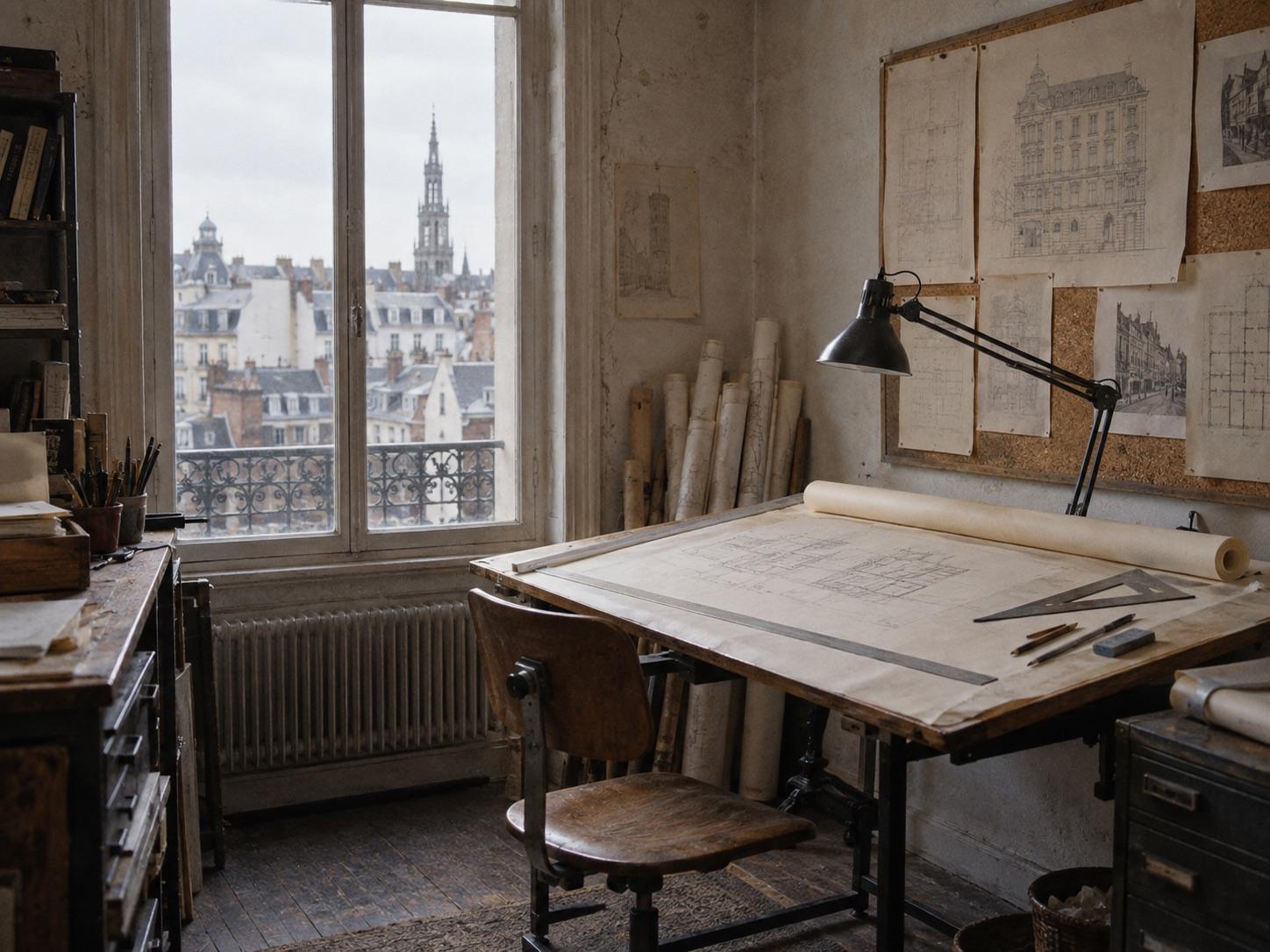
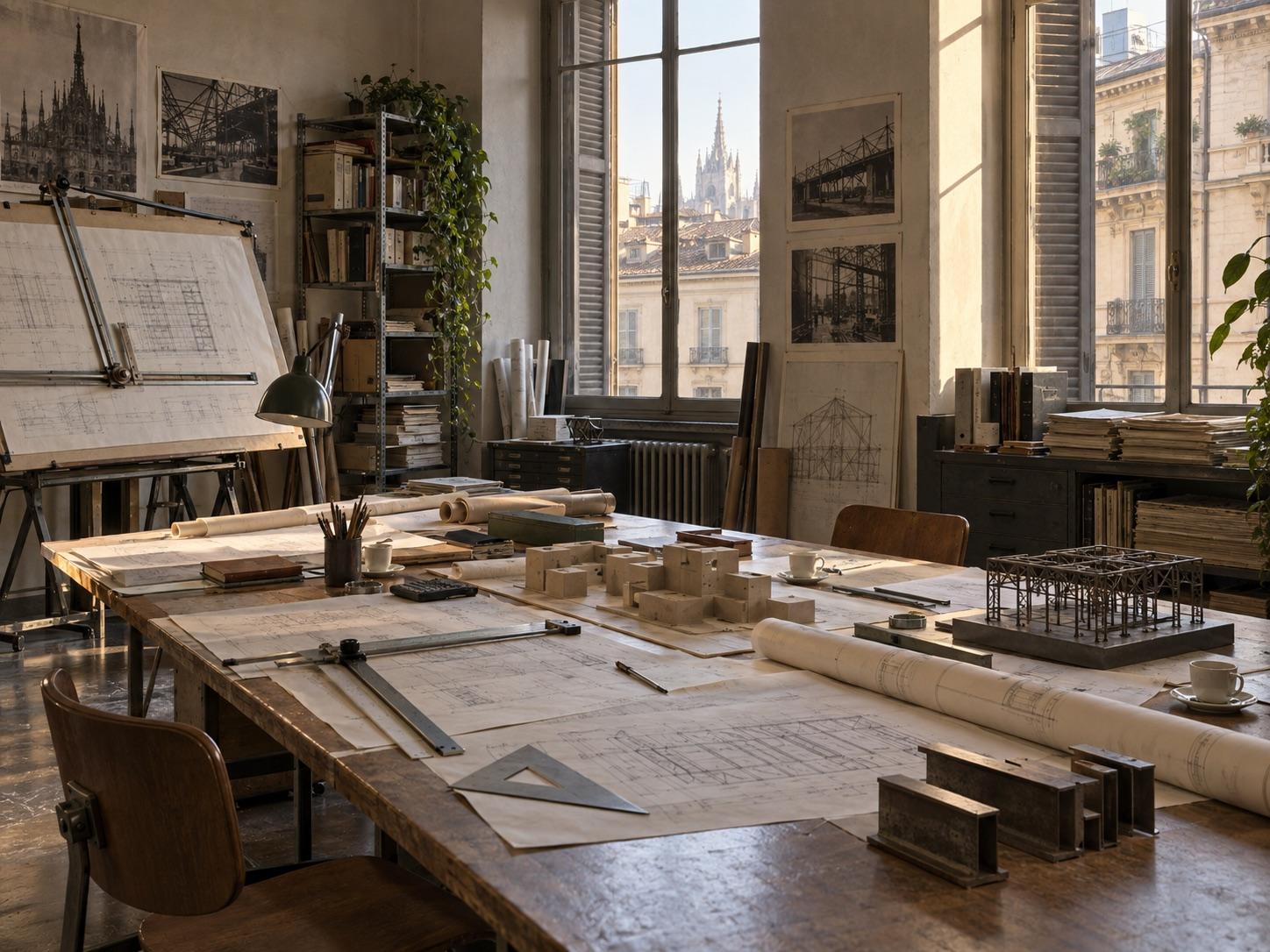
Kristofer Farentane opened a one-person architectural practice in Brussels. The first commissions were modest, and the office was deliberately close to the work: measured surveys, drawings, client meetings, and site questions all returned to the same desk.
That beginning established a habit that survived every later version of the company. Responsibility stayed with the person making the decision.
Brussels / The first workspace, 1988
1989
Milan, Italy
02 / 06
Atelier Maes / Milano
The practice crossed its first border.
A year later, Kristofer moved the practice to Milan. The relocation placed a young office inside a culture where architecture, fabrication, and construction were discussed in the same breath.
The move was not an expansion plan. It was a decision to learn in a larger room, around people who treated material and proportion as practical knowledge rather than finishing touches.
Milan / A shared table before the partnership, 1989
1990
Milan, Italy
03 / 06
Linea Struttura
Architecture found its structural counterpart.
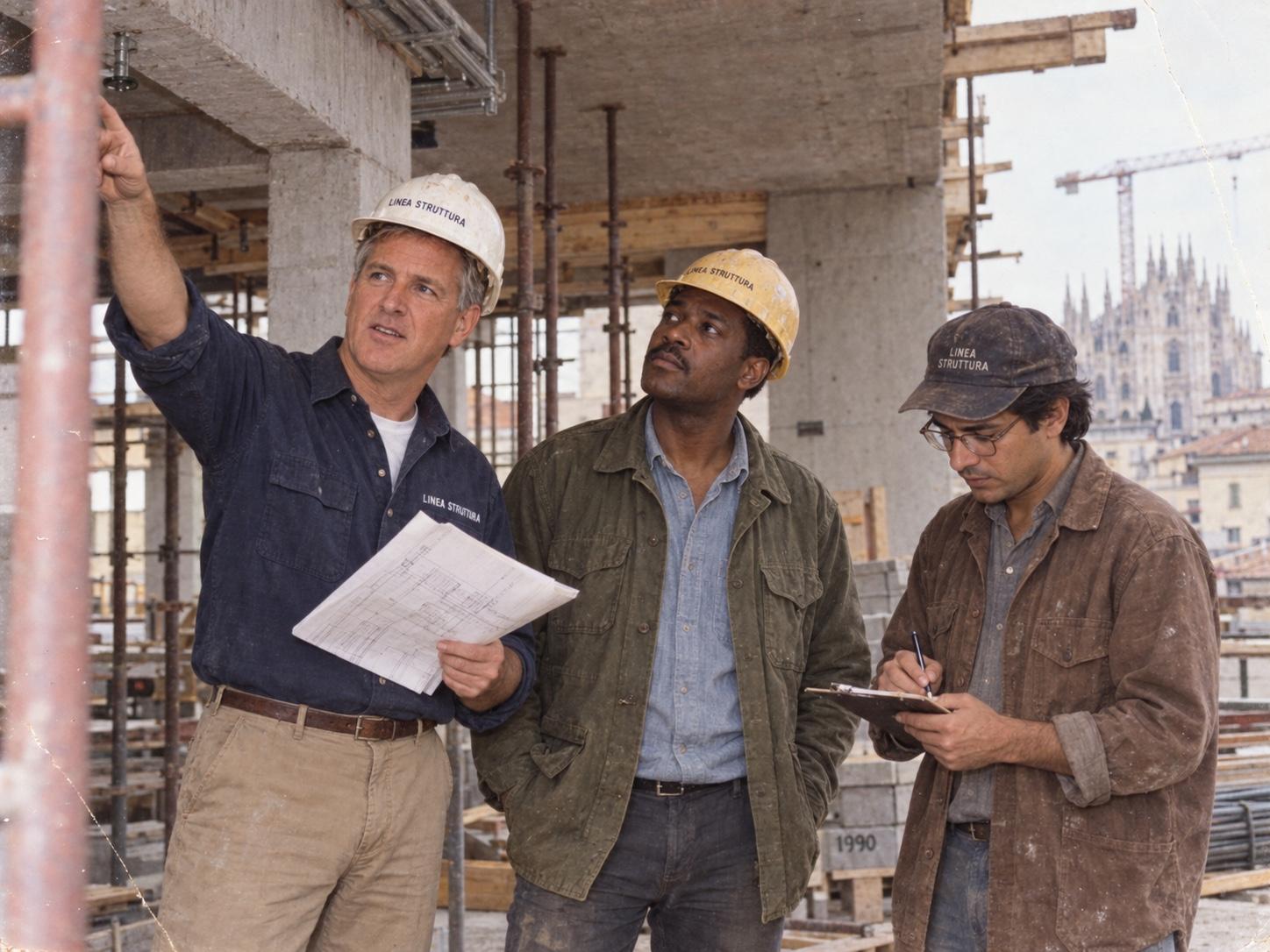
Architect Enzo Rinaldi and structural engineer Luca Ferraro joined Kristofer as co-founders. The new partnership brought building form, construction logic, and structural behavior into one conversation.
The office adopted the name Linea Struttura. It described the work plainly: the line that establishes a room and the structure that allows it to stand were developed together.
Milan / The three Linea Struttura founders on site, 1990
1990-1998
Across Italy
04 / 06
Linea Struttura
Nine years of learning how a practice holds together.
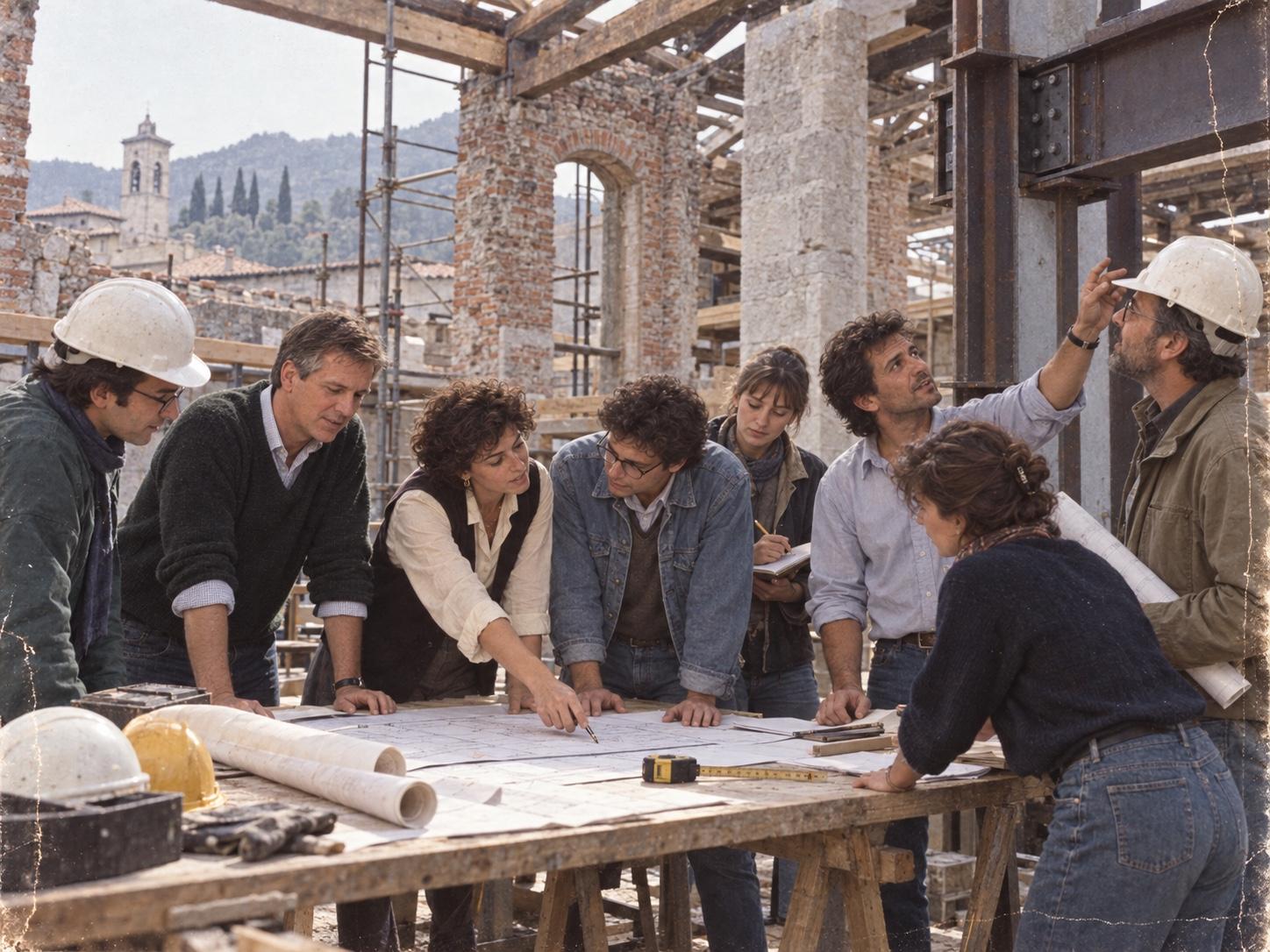
For nine years, the three partners built a working method around existing buildings, new structures, and close collaboration with local makers. The work grew, but the partnership remained small enough for each founder to remain answerable for the drawings issued in the firm's name.
Those years gave the future KMG its central idea: architecture and engineering are strongest when neither discipline arrives late.
Northern Italy / A site review during the Linea Struttura years, 1995
1998-1999
Milan to Dallas
05 / 06
Maes Architecture + Structures
Ownership changed. The work moved again.
In 1998, Kristofer acquired the interests of his two partners and became the sole owner. The Italian studio completed its remaining work and closed rather than continuing as a distant branch without its original partnership.
The following year, the practice established a new base in Dallas. Under the name Maes Architecture + Structures, the office began again with the same joined-up approach and a new set of climates, codes, materials, and construction relationships to understand.
Dallas / The practice begins again, 1999
2024
Dallas, Texas
06 / 06
KMG Architects + Structural Engineers
The family name became the company name.
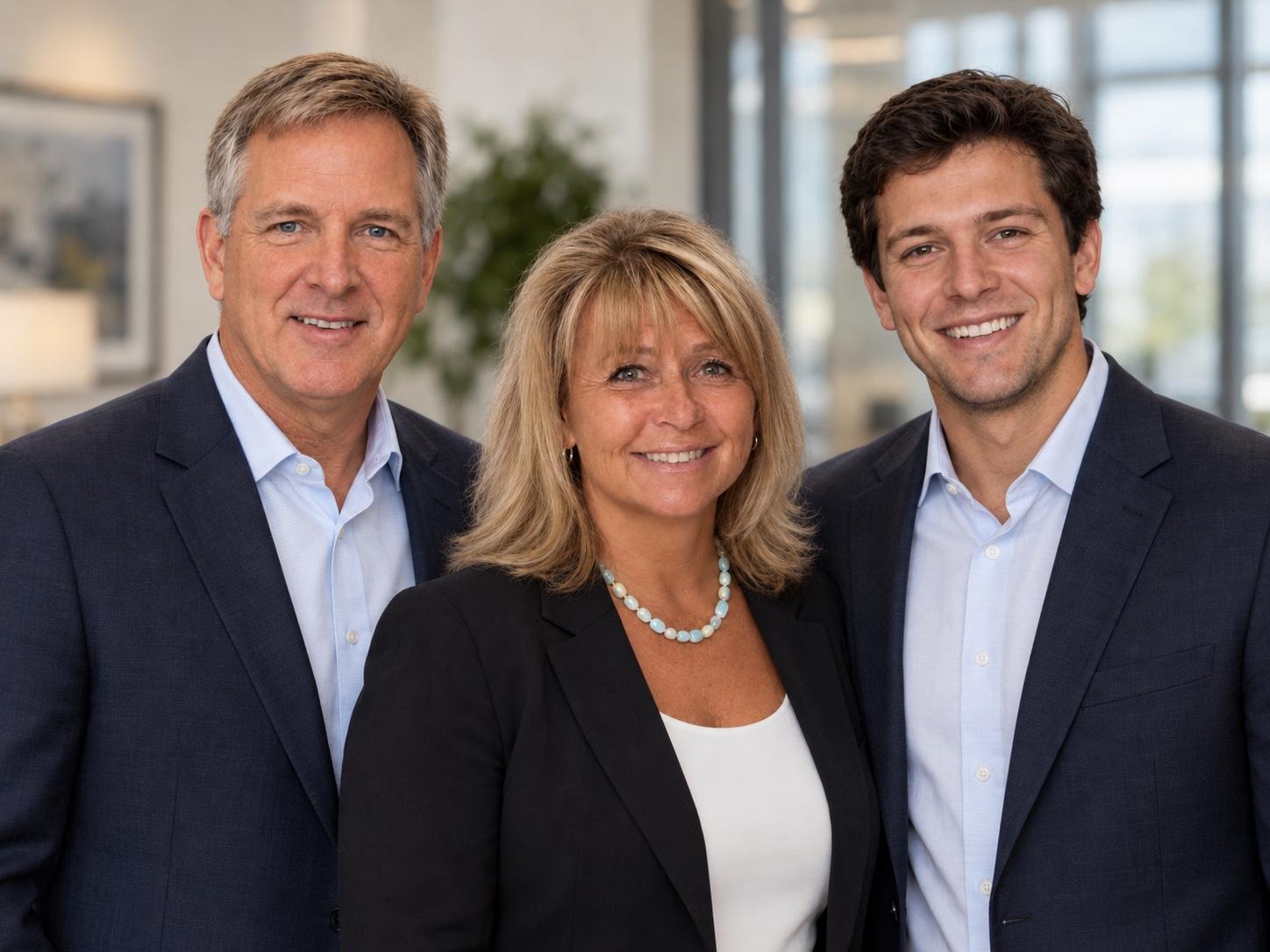
The initials K, M, and G had belonged to the family for years: Kristofer, Mateo, and Gina. After Gina's passing, Kristofer chose to place those initials on the practice itself.
The change to KMG was not intended to erase the earlier offices or partnerships. It gathered the whole history under a name that could remember where the work came from while giving the next generation something clear to carry forward.
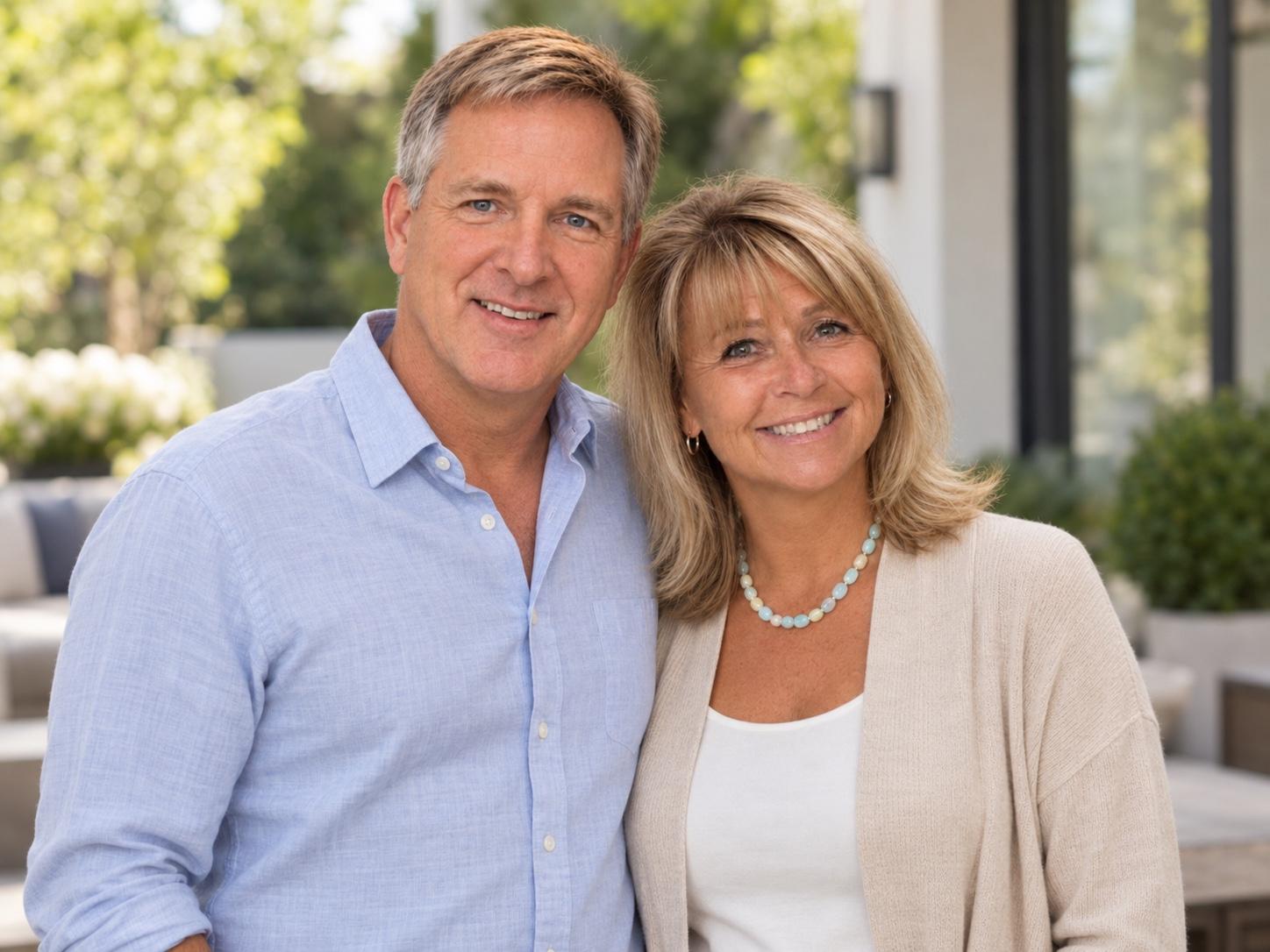
Kristofer, Gina, and Mateo / The family behind the KMG name
The names carried forward
Nothing was erased. Each name marked a different form of the same practice.
The name looks back before the practice moves forward.
Gina was not added to the history of the company after the fact. She was part of the life around every relocation, uncertain beginning, and period of growth that made the practice possible.
When the firm became KMG in 2024, the initials gave her a permanent place in its public name. The change joined Kristofer, Mateo, and Gina without turning a private loss into a corporate slogan.
Kristofer and Gina / A life carried across each move
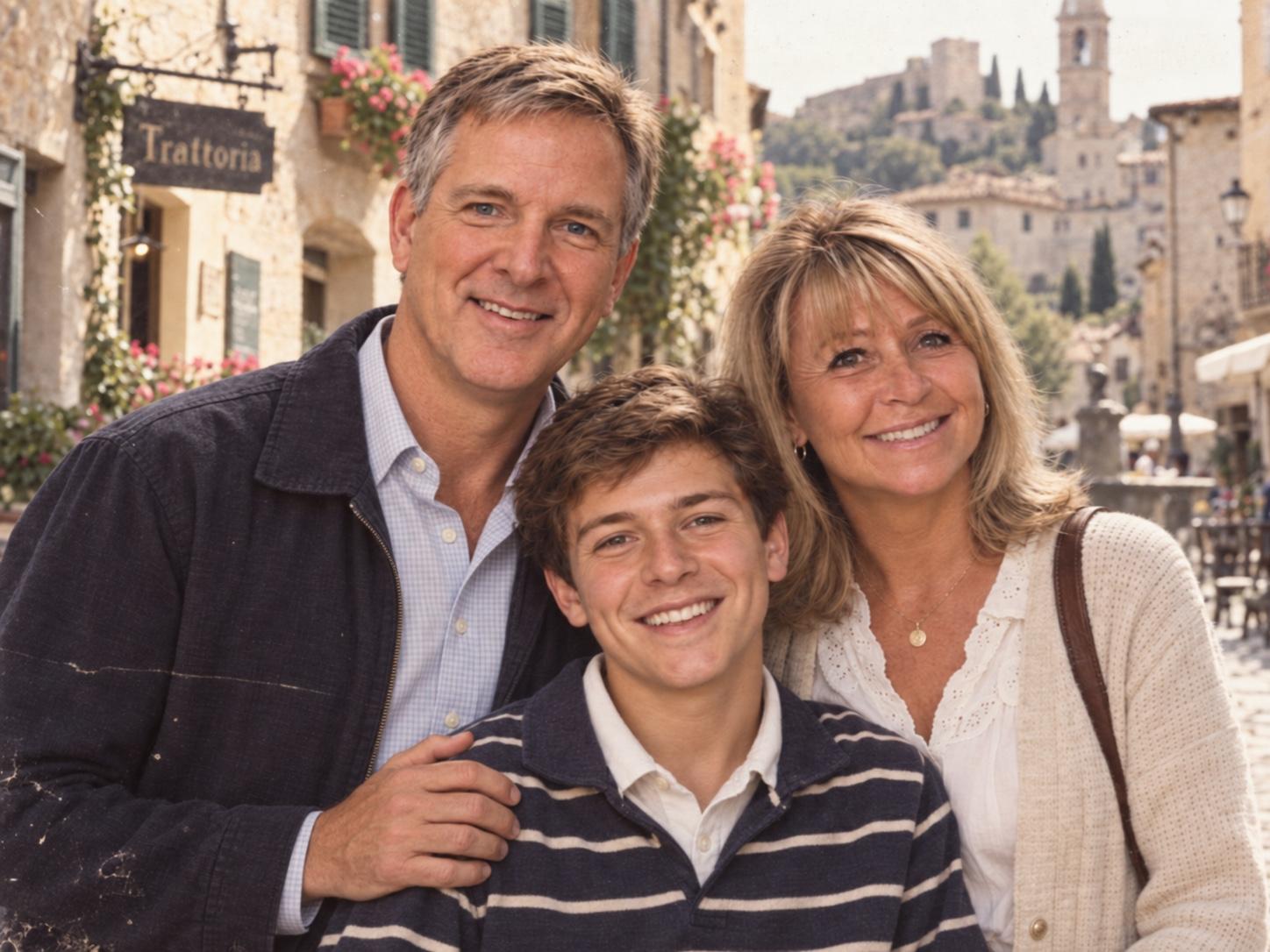
Italy / The family during the earlier years
The family at home / Christmas 2023
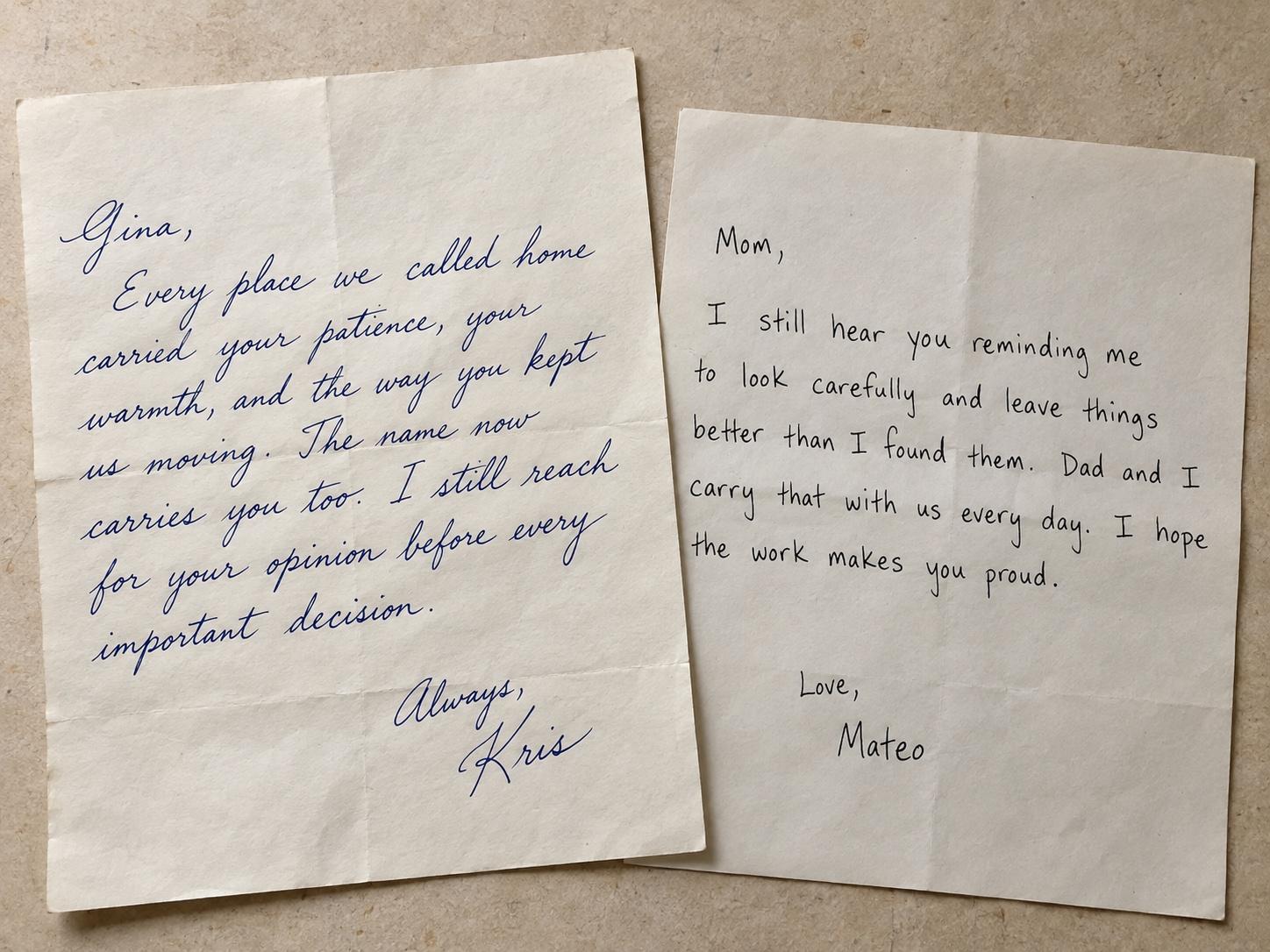
For Gina / Notes from Kris and Mateo
“The initials had belonged to the family for years. In 2024, they became the name of the practice.”
Where the story stands now
Approximately 18 people. Two disciplines. Dallas at the center, with a growing presence in Pennsylvania.
KMG remains intentionally compact, but it is no longer a one-person office. Its next challenge is to build greater capacity without separating leadership from the work or architecture from structure.
The next chapter
The history explains the name. Growth & Scale explains what the firm intends to do with it.